GINN EU Policy Round-Up
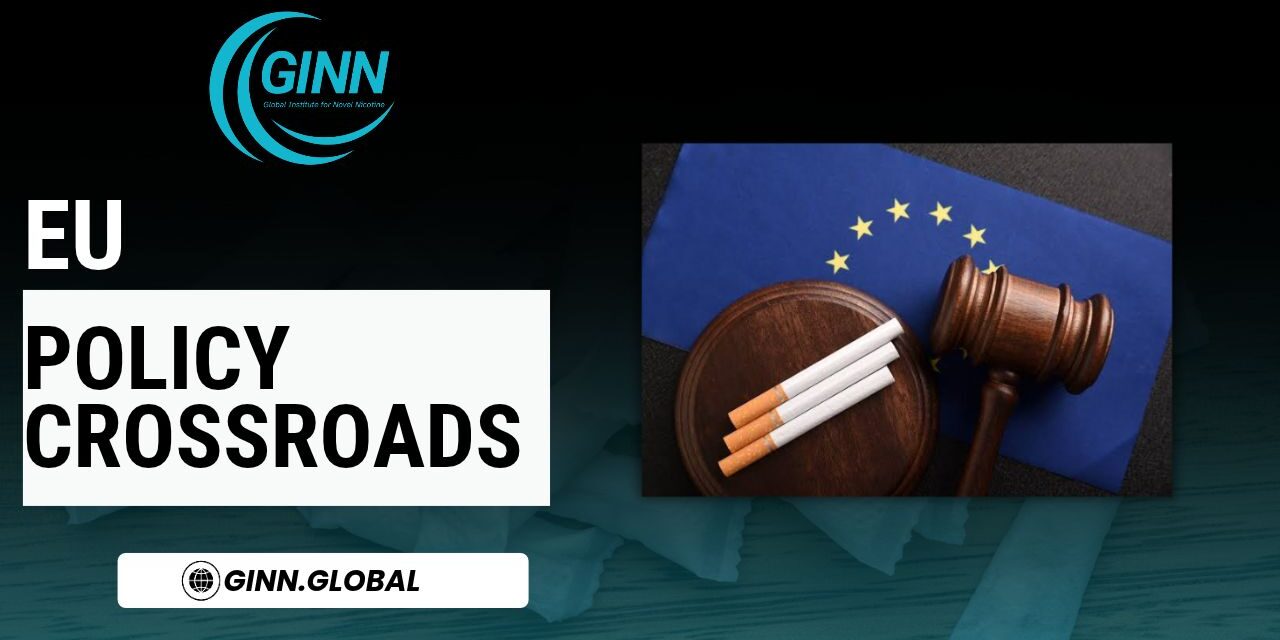
Recent developments in Brussels have exposed a growing tension in EU tobacco policy. The European Parliament is calling for faster regulation of novel nicotine products, while reported concerns from the European Commission’s Regulatory Scrutiny Board raise questions about the assessment underpinning the forthcoming legislation.
At the same time, negotiations over the Tobacco Taxation Directive remain unresolved, and national restrictions on nicotine pouches continue to diverge. Together, these developments could shape the future regulatory treatment of novel nicotine products across Europe.
Parliament Calls for Faster Tobacco Legislation
On 12 November, the European Parliament adopted its report on the implementation of Europe’s Beating Cancer Plan by 447 votes to 66, with 91 abstentions.
The non-binding resolution urges the Commission to revise the Tobacco Products Directive (TPD) without further delay, including provisions addressing e-cigarettes, heated tobacco products and nicotine pouches. It also supports stronger measures concerning taxation, packaging, advertising and retail displays.
MEPs rejected amendments that sought to moderate the timetable and place greater emphasis on independent scientific and socio-economic assessments before legislative changes.
Although the resolution does not change existing EU law, it signals Parliament’s preference for accelerating tobacco control reform as part of the 2040 Tobacco-Free Generation objective.
TPD3: Regulatory Scrutiny Raises Questions
The anticipated revision of the Tobacco Products Directive, commonly referred to as TPD3, is intended to address regulatory gaps involving newer tobacco and nicotine products.
The Commission’s 2026 evaluation identified differences in national approaches to nicotine pouches and the resulting challenges for the internal market. A public consultation subsequently examined possible measures concerning flavours, nicotine content, packaging and marketing.
According to recent reporting cited in the original policy round-up, the Commission’s Regulatory Scrutiny Board issued a negative opinion on 9 November concerning the impact assessment supporting the proposed revision. The reported concerns included proportionality, taxation implications and socio-economic effects.
The draft also identifies an earlier negative assessment associated with the evaluation process. These developments suggest that further analytical work may be necessary before the Commission advances its proposal, although the precise procedural implications and legislative timetable require confirmation.
For GINN, a thorough impact assessment is essential. New rules should be supported by evidence that considers differences in product risk, consumer behaviour and the potential consequences of regulatory restrictions.
Tobacco Taxation: Malta Prevents Agreement
Negotiations over the revised Tobacco Taxation Directive also remain unresolved. At the 9 November ECOFIN meeting, 26 of the EU’s 27 member states reportedly supported the Irish Presidency’s compromise. Malta’s outstanding objections prevented the unanimity required for agreement.
The Commission’s original proposal included a minimum duty for nicotine pouches of 50% of retail price or €143 per kilogram by 2032. Parliament’s ECON committee subsequently proposed a lower minimum of 28% or €50 per kilogram by 2033.
The November policy round-up reports that the latest Council compromise retained a minimum of 50% of retail price or €50 per kilogram, alongside transitional arrangements. These figures remain negotiating proposals rather than adopted EU requirements.
The differences between the proposed rates demonstrate why taxation remains a significant issue for novel nicotine products. Harmonised minimum duties could improve regulatory consistency, but their design should also consider differences in product risk and the potential effects on adult smokers considering alternatives to combustible tobacco.
Further discussions are expected in December.
National Restrictions Continue to Diverge
While EU institutions consider a common framework, national approaches to nicotine pouches remain fragmented.
Belgium, the Netherlands and France have introduced restrictive measures, while Germany’s regulatory treatment has created uncertainty over lawful sales. Other member states continue to permit nicotine pouches under differing national requirements.
In October, eight countries, including France, Belgium, Finland and Spain, called for stronger EU restrictions on novel nicotine products. Their proposals included tighter controls on flavours, nicotine content, packaging, advertising and cross-border sales.
These differences present a challenge for the internal market. A harmonised EU framework could improve regulatory consistency, although the extent of national flexibility and the appropriate level of restriction remain contested.
Sweden and the Importance of Relative Risk
Sweden’s experience remains relevant to the discussion. With daily smoking prevalence around 5%, the country has one of the lowest smoking rates in the EU, alongside a longstanding market for oral nicotine products.
Although Sweden’s outcomes cannot be attributed to a single product or policy, its experience provides useful evidence for examining the relationship between nicotine consumption, smoking prevalence and tobacco-related harm.
Non-combustible nicotine products have different toxicant exposure profiles from cigarettes, although they are not risk-free and important questions remain about long-term effects, dependence and youth uptake.
A proportionate regulatory approach should account for these distinctions while maintaining effective safeguards against youth access and inappropriate marketing.
What Comes Next?
Attention now turns to the Commission’s next steps on TPD3, further assessment of the proposed regulatory framework and renewed ECOFIN negotiations, potentially at the 11 December meeting.
The central challenge is to ensure that the pace of legislative reform does not come at the expense of robust scientific and economic assessment.
GINN supports a harmonised, evidence-based and risk-proportionate approach to nicotine regulation. As EU institutions consider new rules, the framework should recognise differences in product risk, protect young people and assess how regulatory decisions may influence smoking-related harm.
GINN will continue monitoring these developments as negotiations progress.