
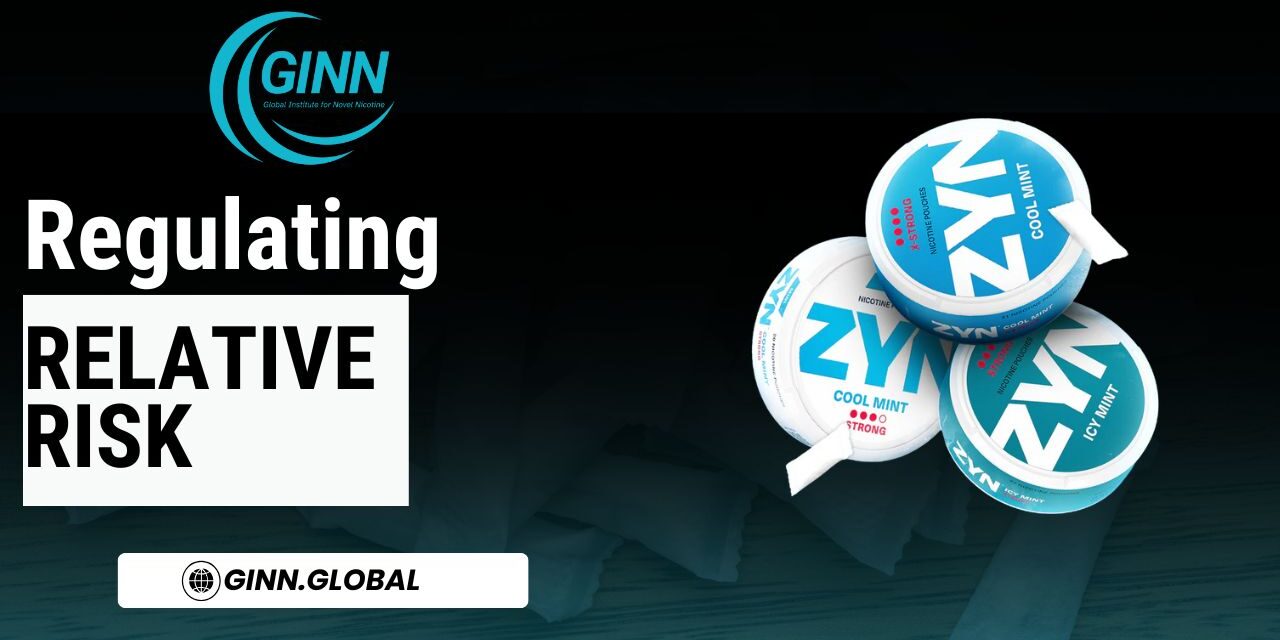
The U.S. Food and Drug Administration’s ongoing review of modified risk tobacco product (MRTP) applications for ZYN nicotine pouches represents a pivotal moment in the regulation of non-combustible nicotine. At stake is not whether nicotine products are “safe,” but whether regulators will permit carefully constrained, evidence-based communication about relative risk compared with cigarette smoking. The outcome has implications for smoking cessation, youth protection, and how clinicians discuss lower-risk options with patients who continue to smoke.
Swedish Match USA, now part of Philip Morris International, has submitted MRTP applications covering 20 ZYN nicotine pouch products. All of these products are already authorized for sale through FDA’s premarket tobacco product application process, meaning they have met the agency’s threshold for marketing under existing law. The MRTP request goes further, asking whether the FDA will allow a specific claim stating that using ZYN instead of cigarettes reduces the risk of serious smoking-related diseases, including cancers, cardiovascular disease, and chronic respiratory conditions.
FDA staff reviews made public through briefing materials indicate that the core comparative risk claim is scientifically supportable when assessed against continued cigarette smoking. The agency’s analysis draws on multiple lines of evidence, including chemical and toxicological testing, epidemiological data from long-term snus use in Scandinavia, and established understanding of the role of combustion in smoking-related disease. An external advisory committee has been convened to evaluate not only the scientific basis of the claim, but also the potential population-level effects, particularly regarding youth uptake and use by never-smokers.
For GINN’s audience, the central point is that the MRTP process is designed to regulate how relative risk is communicated, not to declare products harmless. The FDA’s statutory standard requires that any modified-risk authorization demonstrate a net benefit to population health, balancing potential gains for adult smokers against potential risks for youth and non-users. This framework reflects an effort to integrate harm reduction into tobacco regulation without weakening prevention goals.
The harm-reduction context is critical. Cigarette smoking remains the most dangerous and deadly form of nicotine use, driven primarily by combustion and exposure to smoke-borne toxicants such as tar and carbon monoxide. Switching completely away from combustible products delivers the largest health gains for people who smoke. Nicotine pouches contain nicotine but no tobacco leaf and produce no smoke or aerosol. Testing has consistently shown that many carcinogens present in cigarette smoke are either undetectable or present at substantially lower levels in oral nicotine products. Epidemiological evidence from countries with long histories of snus use shows dramatically lower rates of lung cancer and other smoking-related diseases among snus users compared with smokers, evidence that FDA is explicitly considering as part of its assessment.
From a public-health perspective, the MRTP decision matters because accurate communication about relative risk can support adult smokers who are unwilling or unable to quit nicotine entirely but are prepared to move away from cigarettes. For example, an adult smoker with cardiovascular risk factors who switches completely from daily smoking to exclusive use of nicotine pouches would be expected to substantially reduce exposure to combustion-related toxicants, even though nicotine dependence remains. The question before regulators is whether allowing this information to be communicated under strict conditions improves decision-making without increasing unintended harms.
The review has also drawn attention from clinical communities, including optometry. Recent commentary has raised questions about potential eye-health effects of nicotine pouches, often in the context of broader debates around vaping and nicotine exposure. At present, evidence on ocular effects specific to nicotine pouches is extremely limited. Most available research on eye health relates to cigarette smoking and, to a lesser extent, vaping, where smoke or aerosol exposure can directly irritate the ocular surface and contribute to dry eye and inflammation. Because nicotine pouches do not produce aerosol, any eye-related risks would likely be systemic rather than the result of direct exposure.
While anecdotal reports of visual disturbances following pouch use circulate online, they do not establish causation or population-level risk. For clinicians, the relevant comparison for patients who smoke is not nicotine pouch use versus abstinence, but nicotine pouch use versus continued smoking. Smoking is a well-established risk factor for cataracts, age-related macular degeneration, and vascular conditions that affect ocular health. From a harm-reduction standpoint, the FDA review highlights the need for targeted research on ocular outcomes while reinforcing that combustion, not nicotine itself, is the primary driver of smoking-related eye disease.
Youth use remains a central concern in the MRTP debate. Critics argue that flavored pouches and modified-risk language could encourage adolescent uptake or normalize nicotine use among non-smokers. They also warn that “lower risk” claims could be misinterpreted as “no risk,” undermining prevention messaging. These concerns are not peripheral; they are integral to the FDA’s legal analysis. Any MRTP authorization must show that the overall effect on population health is positive, accounting for both adult switching and potential youth initiation.
From a GINN perspective, the policy challenge is not to dismiss youth concerns, but to address them through proportionate safeguards rather than blunt prohibition. Strong age-verification requirements, clear retail controls, product standards, and packaging that avoids youth-oriented cues are essential. Equally important is precise communication that consistently frames reduced risk in comparative terms, lower risk than smoking, not safe or harmless.
The FDA’s review of ZYN’s MRTP applications underscores a broader question facing regulators worldwide: whether evidence-based communication about relative risk can be integrated into tobacco control without compromising youth protection. For GINN, this moment presents an opportunity to encourage informed dialogue among regulators, clinicians, and public-health practitioners. Interdisciplinary engagement, including input from cardiology, pulmonology, optometry, and harm-reduction experts, can help refine guidance for adult smokers while ensuring that prevention remains central.
As the FDA moves toward a final decision, the outcome will shape not only how nicotine pouches are discussed in the United States, but also how other jurisdictions think about regulating and communicating relative risk. The challenge is to ensure that science informs policy, that uncertainty is acknowledged transparently, and that smokers are not left without credible pathways away from the most harmful form of nicotine consumption.