Public debate around tobacco harm reduction (THR) is increasingly shaped not only by science, but by how that science is communicated. As non-combustible nicotine products expand across global markets, the gap between evidence and public understanding has become a central policy challenge. Miscommunication, oversimplification, and emotive framing risk distorting regulatory discussions at precisely the moment when clarity is most needed.
Recent commentary on tobacco harm reduction communication underscores a critical reality: how we describe relative risk can influence public perception as much as the underlying data itself.
The communication dilemma
At the heart of tobacco harm reduction is a straightforward scientific observation: combustion drives the overwhelming majority of smoking-related disease. Non-combustible nicotine products, including oral nicotine pouches, heated tobacco products, and certain vapor products, eliminate smoke and substantially reduce exposure to many toxicants associated with cancer, cardiovascular disease, and respiratory illness.
Yet communicating “substantially lower risk” presents inherent challenges. Public-health messaging has long relied on simple, categorical language, “smoking kills,” “tobacco causes cancer.” Introducing nuance into this framework requires careful explanation of relative versus absolute risk.
When communication fails to distinguish between these concepts, two distortions can occur. First, lower-risk products may be portrayed as equally harmful as cigarettes, undermining incentives for adult smokers to switch. Second, poorly framed messaging may inadvertently normalise nicotine use or be misinterpreted as declaring products “safe.”
Effective communication must navigate between these extremes.
Relative risk is not trivialization
A recurring tension in harm-reduction debates is the fear that discussing relative risk diminishes the seriousness of nicotine dependence or long-term uncertainty. However, acknowledging a risk continuum does not trivialise harm. Rather, it reflects epidemiological reality.
Cigarettes remain uniquely dangerous because they involve inhalation of combusted tobacco smoke. By contrast, non-combustible nicotine products deliver nicotine without combustion and typically with far lower levels of carcinogens and toxicants.
For policymakers, the question is not whether alternative products are harmless. It is whether communicating accurate comparative risk can accelerate the decline of combustible tobacco use without increasing youth initiation or non-user uptake.
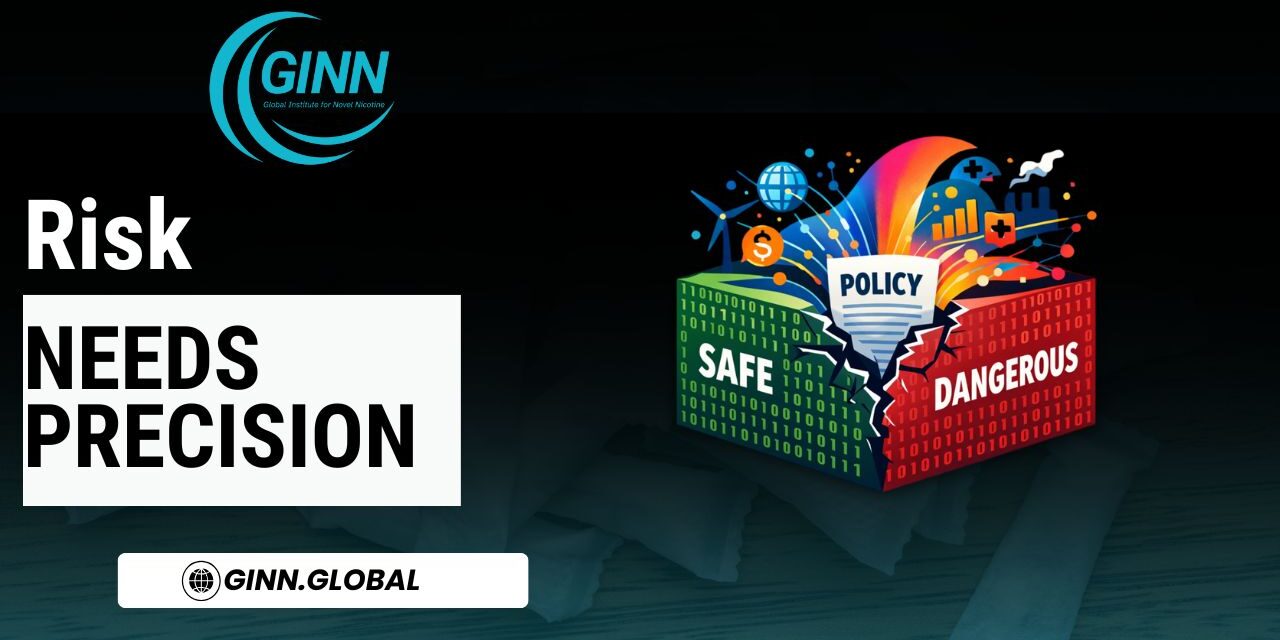
Precision in language matters. “Lower risk than smoking” is not equivalent to “safe.” Clear contextualisation protects public understanding while preserving scientific integrity.
Trust, transparency, and credibility
Another communication challenge lies in trust. Tobacco control has historically been shaped by justified scepticism toward industry actors. As a result, even scientifically sound findings can be dismissed if they are perceived to originate from commercial interests.
To strengthen credibility, harm-reduction communication should prioritise:
- Transparent disclosure of funding and conflicts of interest
- Independent replication of findings
- Clear separation between scientific claims and marketing language
- Engagement with multidisciplinary experts, including clinicians and public-health researchers
Overstated claims, whether positive or negative, erode trust. Balanced, evidence-based framing builds it.
The role of clinicians and public-health professionals
Healthcare professionals increasingly face questions from patients about nicotine pouches, heated products, or vapor devices. In the absence of clear guidance, clinicians may default to blanket discouragement, even when patients are long-term smokers who have struggled to quit.
Evidence-based communication can support more informed clinical conversations. A clinician might appropriately explain that:
- Complete cessation of nicotine is the lowest-risk option.
- If a patient is unable or unwilling to quit, switching completely from cigarettes to a non-combustible product is likely to reduce exposure to many harmful toxicants.
- Dual use, continued smoking, and youth use remain concerns that require monitoring.
Such conversations require nuance, not slogans.
Avoiding polarisation
The article highlights how polarised narratives, portraying harm-reduction advocates as industry apologists or critics as anti-science, undermine constructive policy dialogue. Public health benefits when debate focuses on data quality, methodological rigor, and population-level impact, not ideological positioning.
Risk communication in this space should avoid alarmist metaphors and reductive framing. Terms like “safe alternative” or “harmless nicotine” can mislead. Conversely, framing lower-risk products as deceptive or inherently equivalent to cigarettes obscures well-established differences in toxicant exposure.
Evidence-based policymaking depends on proportionality. Communication should mirror that principle.
A constructive path forward
For GINN’s audience, several practical implications emerge:
- Promote clear distinction between combustion-related harms and nicotine-related risks.
- Support research transparency and independent validation.
- Encourage regulatory language that differentiates between product categories based on toxicological profiles.
- Engage clinicians and public-health professionals in evidence-based dialogue.
- Advocate youth protections without collapsing risk distinctions for adults who smoke.
The long-term success of tobacco harm reduction will depend not only on product standards and regulatory frameworks, but on communication that is accurate, proportionate, and credible.
Nicotine products exist on a continuum of risk. Recognising that continuum, and communicating it responsibly, is central to reducing the global burden of smoking-related disease.
For policymakers, the challenge is not whether to communicate relative risk—but how to do so in a way that protects youth, supports adult smokers seeking lower-risk alternatives, and maintains public trust in science.