
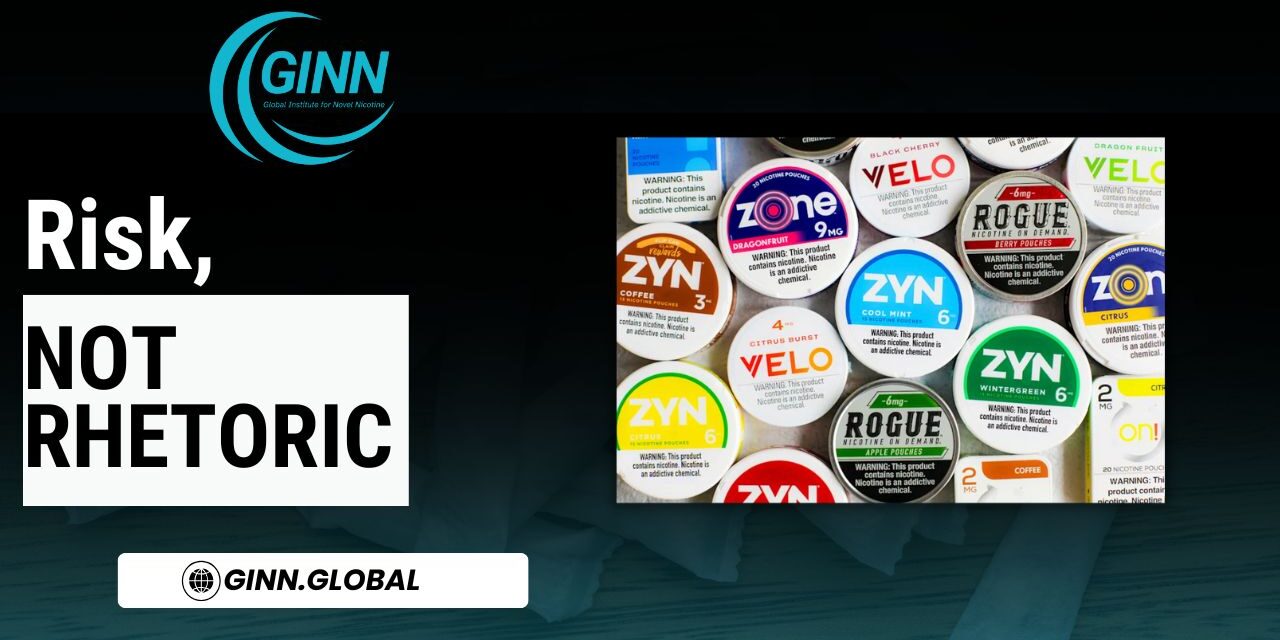
Recent commentary describing nicotine pouches as “a wolf in sheep’s clothing” reflects legitimate public-health concerns about youth uptake, long-term uncertainty, and nicotine dependence. However, the framing risks obscuring a critical distinction at the heart of modern tobacco control: the difference between absolute risk and relative risk. Nicotine pouches are not risk-free, but the available evidence indicates they expose users to far fewer toxicants than combustible cigarettes. For adults who smoke or use high-risk smokeless products, complete switching to nicotine pouches has the potential to meaningfully reduce harm.
A balanced public-health approach must therefore do two things simultaneously. It must minimise youth uptake and non-user initiation, while also leveraging lower-risk alternatives to accelerate the decline of cigarette smoking, still the leading cause of preventable tobacco-related disease.
Toxicant exposure and comparative risk
The article itself acknowledges a key scientific point: biomarker and chemical analyses consistently show substantially lower exposure to many toxicants among nicotine pouch users compared with cigarette smokers, even when nicotine absorption is similar. This finding is not incidental; it is the central rationale behind tobacco harm reduction. Combustion, not nicotine, is the primary driver of smoking-related cancer, cardiovascular disease, and respiratory illness.
This distinction underpins regulatory decisions in the United States. The FDA’s marketing authorisation for specific nicotine pouch products was based on evidence that they contain significantly fewer harmful substances than cigarettes and most traditional smokeless products, and therefore pose a lower risk of serious smoking-related diseases. The agency’s assessment drew on toxicology, chemistry, and epidemiological evidence, including decades of data from Scandinavian snus use. Notably, long-term snus users show no meaningful increase in lung cancer and far lower overall disease risk than smokers. While nicotine pouches remove tobacco leaf entirely, a further step away from combustion, long-term oral outcomes such as gum irritation or recession still warrant continued monitoring.
Recognising reduced exposure does not deny uncertainty. It acknowledges that risk exists on a continuum, and that reducing exposure to the most harmful toxicants can yield substantial public-health gains when smokers switch completely.
Youth use and “gateway” concerns
Youth uptake is rightly a central concern in nicotine policy debates. Recent U.S. data show that lifetime and past-30-day nicotine pouch use among older adolescents increased between 2023 and 2024, with past-30-day prevalence rising from approximately 1.3% to 2.6%. This trend deserves attention, but it does not yet constitute a mass youth epidemic.
Importantly, the same data indicate that increased pouch use coincided with a decline in exclusive e-cigarette use, suggesting product substitution within an existing group of nicotine-using adolescents rather than widespread recruitment of never-users. In adults, survey data from the UK and elsewhere show pouch use remains concentrated among younger men and at low overall prevalence, reinforcing the view that this is a niche but growing category.
These patterns argue for targeted, proportionate regulation, strict age limits, marketing controls, product standards, and enforcement, rather than blanket prohibition. Overly restrictive approaches risk pushing adult smokers back toward cigarettes or into unregulated markets without delivering clear youth-protection benefits.
Regulatory recognition of harm reduction
The FDA’s approach illustrates how harm reduction is already embedded, cautiously, in tobacco regulation. Under U.S. law, the agency must assess whether a product is “appropriate for the protection of public health,” considering the entire population, including youth and non-users. In authorising certain nicotine pouches for sale, FDA explicitly concluded that they may benefit adult smokers or smokeless tobacco users by reducing harm when used as a substitute for cigarettes.
This risk-proportionate approach contrasts with outright bans adopted in some jurisdictions, such as France’s 2025 prohibition on nicotine pouches. While precaution is a legitimate regulatory principle, international experience with snus in Sweden, where smoking prevalence and tobacco-related mortality are among the lowest in Europe, suggests that encouraging movement from smoked to oral nicotine can deliver substantial population-level benefits when carefully regulated.
Cessation and switching potential
Evidence on switching and cessation continues to develop. Company-funded data cited by critics suggest a meaningful proportion of dual users fully switch to nicotine pouches over several months, with sharp declines in continued cigarette use. While such findings require independent replication, they align with broader harm-reduction evidence: appealing, lower-risk alternatives can displace higher-risk products.
Independent reviews indicate that smokers who switch to nicotine pouches experience substantial reductions in exposure to toxic and carcinogenic compounds. Pharmacokinetic studies show that low- to mid-strength pouches deliver nicotine levels sufficient to relieve cravings without reproducing the toxicant burden of smoking. Higher-strength products can deliver more nicotine, which strengthens the case for sensible product-strength caps and labelling standards, not categorical rejection of the category.
A constructive harm-reduction framework
A GINN-aligned response acknowledges key realities. Nicotine pouches are not harmless and are inappropriate for youth and non-users. Long-term epidemiological data, particularly for oral health outcomes, are still emerging. These uncertainties justify regulation, surveillance, and continued research.
At the same time, the evidence is clear that nicotine pouches deliver nicotine without combustion or tobacco leaf, expose users to far fewer toxicants than cigarettes, and have been judged by regulators such as the FDA to offer net public-health benefits under controlled conditions. Early real-world evidence suggests they can support switching away from cigarettes and other high-risk products, which, if sustained, could significantly reduce smoking-related disease.
The policy task is therefore not to choose between prevention and harm reduction, but to integrate both. Strong age verification, product standards, health warnings, and marketing restrictions are essential to minimise youth uptake. Differential, risk-proportionate regulation that clearly distinguishes combustible tobacco from lower-risk oral nicotine can help guide adult smokers toward less harmful options without normalising nicotine use among non-users.
Seen through this lens, nicotine pouches are better understood not as a “wolf in sheep’s clothing,” but as a lower-risk nicotine option that can be responsibly incorporated into comprehensive tobacco-control strategies, with vigilance, safeguards, and an unwavering focus on reducing the burden of combustible tobacco.
👉 Authors of the original piece:
Luis F. Gonzalez and Theodore C. Friedman (your insights are part of an important dialogue on evolving nicotine policy).
Read the original monitoring letter here: https://doi.org/10.18332/tpc/211847