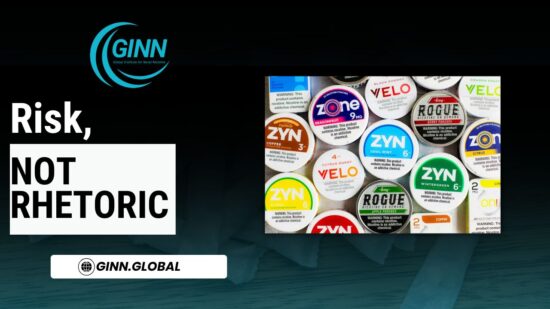

The U.S. Urban–Rural Divide in Nicotine Pouch Sales: Regulatory Implications

As nicotine pouches gain market presence in the United States, regulators must understand not only who is using these products, but where and under what conditions they are being purchased. A recent peer-reviewed study published in Preventive Medicine provides new empirical evidence by examining urban–rural differences in nicotine pouch sales, pricing, and flavour preferences across…


Nicotine Pouches: Market Growth and Regulatory Crossroads

Recent market analyses from multiple industry research groups indicate that nicotine pouches are among the fastest-growing segments within the broader nicotine alternatives category. Reports from Fact.MR, Euromonitor International, Grand View Research, and other sector analysts project sustained global expansion over the coming decade, driven by regulatory pressure on combustible cigarettes, product innovation, and widening consumer…

Harm Reduction, Misinformation and the Integrity of Tobacco Science

Debates around tobacco harm reduction are increasingly shaped not only by emerging products and regulatory decisions, but by how science itself is communicated. A recent commentary on misinformation and “clickbait science” in the tobacco harm reduction space highlights a growing concern: that exaggerated claims, selective interpretation of findings, and sensational headlines can distort both public…

FDA’s Review of ZYN’s Modified Risk Applications Signals a Turning Point for Nicotine Policy

The U.S. Food and Drug Administration’s ongoing review of modified risk tobacco product (MRTP) applications for ZYN nicotine pouches represents a pivotal moment in the regulation of non-combustible nicotine. At stake is not whether nicotine products are “safe,” but whether regulators will permit carefully constrained, evidence-based communication about relative risk compared with cigarette smoking. The…

Nicotine Pouches and Harm Reduction

Nicotine pouches remain at the centre of the global harm‑reduction conversation — and a major new peer‑reviewed review helps explain why. A new narrative review by Konstantinos Farsalinos in Internal and Emergency Medicine reinforces a clear message: modern, tobacco‑free nicotine pouches sit at the very lowest end of the toxicant‑exposure continuum. Chemical analyses and biomarker…

The EU’s Tobacco Policy Expert Group Is Ending — What Comes Next Matters More Than Ever

The European Commission has confirmed that the EU Tobacco Policy Expert Group (TPEG) will formally conclude its mandate, even as work on the next revision of the Tobacco Products Directive (TPD) continues. While the end of a technical advisory body may appear procedural, it raises important questions about how expertise, evidence, and stakeholder input will…

Nicotine Pouches and Harm Reduction: A Response to the “Wolf in Sheep’s Clothing” Narrative

Recent commentary describing nicotine pouches as “a wolf in sheep’s clothing” reflects legitimate public-health concerns about youth uptake, long-term uncertainty, and nicotine dependence. However, the framing risks obscuring a critical distinction at the heart of modern tobacco control: the difference between absolute risk and relative risk. Nicotine pouches are not risk-free, but the available evidence…

Oral Health, Uptake Patterns, and Regulation: What’s Missing in the Nicotine Pouch Debate

As nicotine pouches continue to attract regulatory attention, discussion has increasingly focused on isolated clinical observations and precautionary warnings, often without sufficient context on real-world use patterns or comparative risk. This imbalance risks obscuring a more important question for public health: how nicotine pouches are actually used, by whom, and how regulation can address legitimate…

Why Nicotine Pouch Growth Is Continuing and What It Signals Next

Nicotine pouches continue to expand across multiple markets, even as regulatory scrutiny intensifies and public debate grows more polarised. This sustained growth is not accidental, nor is it driven by novelty alone. It reflects a convergence of behavioural, commercial, and policy dynamics that are reshaping how adult nicotine users move away from combustible cigarettes. For…