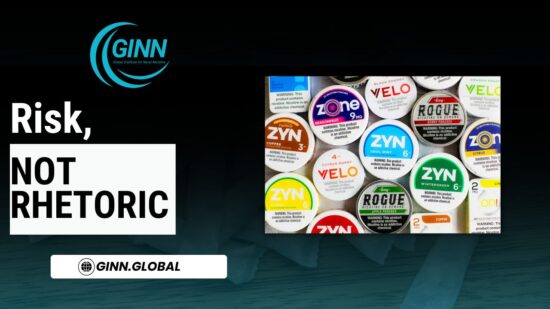

Nicotine, the Heart, and Why Risk Differentiation Still Matters

Recent media coverage of a report examining nicotine’s effects on the heart and blood vessels has renewed debate about cardiovascular risk and nicotine regulation. In response, experts contributing to the UK Science Media Centre (SMC) have provided important clarification that adds nuance often missing from public discussion. Their commentary reinforces a central principle in tobacco…

New Evidence Reinforces the Need for Risk-Proportionate Nicotine Regulation

As nicotine markets continue to evolve, regulators are increasingly challenged to design policies that protect young people while also reflecting the growing body of evidence on relative risk among nicotine products. A new peer-reviewed study published in Nicotine & Tobacco Research adds important insight into how non-combustible nicotine products are used and perceived, and what…

Nicotine, Cardiovascular Risk, and the Importance of Proportionate Regulation

Nicotine does have measurable effects on the cardiovascular system. That point is not in dispute. However, treating all nicotine products as equally harmful, regardless of whether they are smoked or smoke-free, is not supported by the balance of current evidence and risks undermining smoking cessation and broader public-health objectives. Recent commentary has renewed attention on…

Awareness of Nicotine Pouches Is Rising, but Understanding of Risk Still Lags

Awareness and use of oral nicotine pouches are increasing across multiple countries, according to new peer-reviewed research published in BMJ Public Health. While this growth reflects changing nicotine markets and consumer behaviour, the findings also reveal a persistent challenge: greater awareness has not been matched by clear public understanding of relative health risk. This gap…

How Inaccurate Scientific Narratives Spread in Media Coverage of Nicotine Alternatives

Public understanding of nicotine products increasingly depends on how science is communicated through mainstream media. Yet, misinformation and oversimplified reporting continue to influence how adults who smoke, regulators, and health professionals interpret the risks of non-combustible nicotine products. These narratives often emerge not from a lack of scientific evidence, but from how research is framed,…

Nicotine Pouches and Health Risks: What New Clinical Evidence Reveals

A recent study published in JAMA Network Open provides important insights into the biological effects of nicotine pouches, adding much-needed clinical evidence to an area often dominated by speculation. The findings reaffirm a central message in tobacco harm reduction: while nicotine is addictive, the health risks associated with non-combustible nicotine products are dramatically lower than…

Nicotine and Medical Research: The Overlooked Science Behind a Stigmatized Molecule

Nicotine has been vilified for decades, often conflated with the devastating health effects of smoking. Yet modern medical research continues to show that nicotine itself is not the cause of smoking-related cancers or cardiovascular disease. Instead, it is the combustion of tobacco, the burning process that releases thousands of toxic chemicals, that drives most smoking-related…

Cochrane Review: What We Know and Don’t Yet Know—About Nicotine Pouches and Smoking Cessation

A new Cochrane systematic review has examined whether oral nicotine pouches can help people stop smoking, vaping, or using other forms of tobacco. While early evidence is promising in showing lower toxicant exposure, the review concludes that more data is needed to determine their long-term impact on cessation outcomes. What the Review Found The Cochrane…