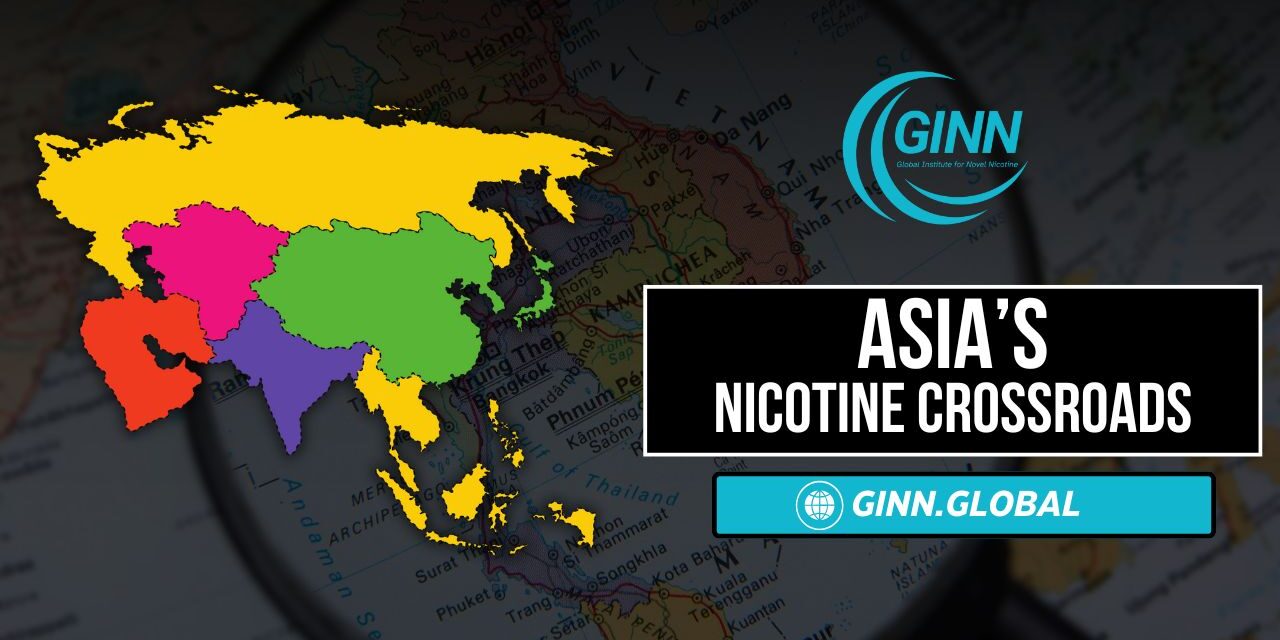
Asia, the world’s largest consumer of combustible tobacco, is becoming a critical region in shaping the regulatory future of nicotine pouches and other smoke-free products. As governments across the continent respond to rising demand for safer nicotine alternatives, the picture that emerges is far from uniform. Regulations range from strict prohibitions and pharmaceutical-style oversight to loosely enforced grey zones. This patchwork highlights both the complexity of tobacco control in Asia and the enormous potential of proportional harm reduction policies.
Southeast Asia: Tradition Meets Modern Products
Southeast Asia is home to the majority of the world’s 301 million smokeless tobacco users, where products like gutkha, betel quid, and traditional snus-style sachets are deeply rooted in cultural life. Yet, when it comes to modern nicotine pouches, the region is cautious and often restrictive.
In Cambodia, regulation of traditional smokeless products is already strict, but modern nicotine pouches remain in a legal grey area, with enforcement inconsistent. Indonesia places these products under its national tobacco law, though the framework is unclear, and manufacturers face uncertainty over approval processes. In Thailand, all vaping products were banned years ago, and while traditional oral products remain widely available, modern pouches are not legally sold. Laos has introduced one of the region’s most comprehensive bans, covering both vaping and oral nicotine alternatives, with penalties that include fines and legal action. Myanmar has similarly taken a restrictive approach, but as with other countries in the region, illicit trade persists and pouches can still be found through informal markets.
Malaysia and Vietnam offer more nuanced cases. Both countries are actively debating whether modern pouches should fall under “new generation tobacco” frameworks, often discussed alongside vaping and heated tobacco. Vietnam recently announced its intention to impose a complete ban on the sale and use of vaping and heated tobacco products, though the status of pouches remains under review. Malaysia regulates pouches under its pharmaceutical regime, which may treat them similarly to nicotine replacement therapies. This approach could give consumers legal access, but leaves the category vulnerable to further restrictions. The Philippines, meanwhile, has established a comprehensive system requiring that all modern nicotine products be registered, labeled with health warnings, and sold exclusively through licensed retailers.
East Asia: A Region of Contrasts
In East Asia, regulatory responses vary dramatically from country to country. Japan has become one of the most progressive jurisdictions, allowing pouches, particularly those containing synthetic nicotine, under pharmaceutical regulation. While their sale requires government authorization, this system has enabled a legal market that aligns with Japan’s broader harm reduction strategy, already demonstrated by its widespread acceptance of heated tobacco. South Korea, on the other hand, has taken a more restrictive path. Regulators announced in 2024 that synthetic nicotine products, including pouches, would be treated under the same laws as combustible tobacco, bringing them under tighter control.
China presents perhaps the most complex case. As the world’s largest producer and consumer of traditional tobacco, the country has not developed a clear framework for nicotine pouches. Instead, oversight falls under the State Tobacco Monopoly, which tightly controls all tobacco-related products. While officials have voiced concerns over unregulated use, formal regulation of nicotine pouches is not yet in place. In Brunei, nicotine pouches are banned, reflecting a continuation of the country’s conservative tobacco policies.
South Asia: Early Developments in a Smoking Hotspot
South Asia, home to hundreds of millions of smokers, is beginning to shape its own path on nicotine pouches. India, which has the second-largest number of smokers after China, banned e-cigarettes in 2019 but has not yet developed specific rules for pouches. Officials have signaled that any future framework will likely follow existing tobacco regulations, which emphasize strict health controls. Pakistan’s stance remains fluid, with nicotine pouches available on the market despite the absence of clear laws. Policymakers there have hinted that regulation is forthcoming, but details remain uncertain.
Central Asia and the Middle East: Grey Zones and Emerging Regulation
In Central Asia and the Middle East, regulation is equally fragmented. Russia moved quickly to ban nicotine pouches, even while continuing to permit traditional smokeless tobacco. This contrasts with Saudi Arabia, where nicotine pouches are not explicitly banned but face heavy restrictions. Companies must seek product classification before launch, and customs authorities retain the power to block imports at will. Qatar also treats pouches cautiously, requiring that any imports comply with consumer safety standards, though the regulatory details remain vague.
The United Arab Emirates has emerged as a regional outlier by moving toward acceptance. In July 2025, the UAE officially authorized the sale of nicotine pouches under a pharmaceutical framework, aligning its rules with international standards. This decision reflects the country’s broader strategy of harmonizing its tobacco and nicotine regulations with the EU and the U.S., while also signaling openness to reduced-risk alternatives.
Looking Ahead: Asia’s Critical Role in Harm Reduction
Asia’s regulatory landscape for nicotine pouches is fragmented but evolving. The region’s governments face the difficult task of balancing youth protection, cultural traditions, and public health priorities. For some countries, such as Japan and the UAE, harm reduction is being integrated into tobacco control strategies. Others, like Laos, Thailand, and Brunei, continue to pursue strict prohibitionist approaches that risk fueling illicit markets.
What is clear is that Asia, with its enormous population of smokers, will play a decisive role in the global future of nicotine harm reduction. Proportional regulation that distinguishes between combustible tobacco and smoke-free products could bring dramatic public health benefits. Denying access to alternatives, by contrast, risks perpetuating the burden of smoking-related disease.
For GINN, the takeaway is simple: science-based regulation must replace fear-driven bans. Policymakers in Asia should consider not only the risks but also the life-saving potential of nicotine pouches and other non-combustible products. As seen in Sweden, Japan, and other early adopters, modern oral nicotine can be part of the solution, but only if governments provide a pathway for responsible access and oversight.